
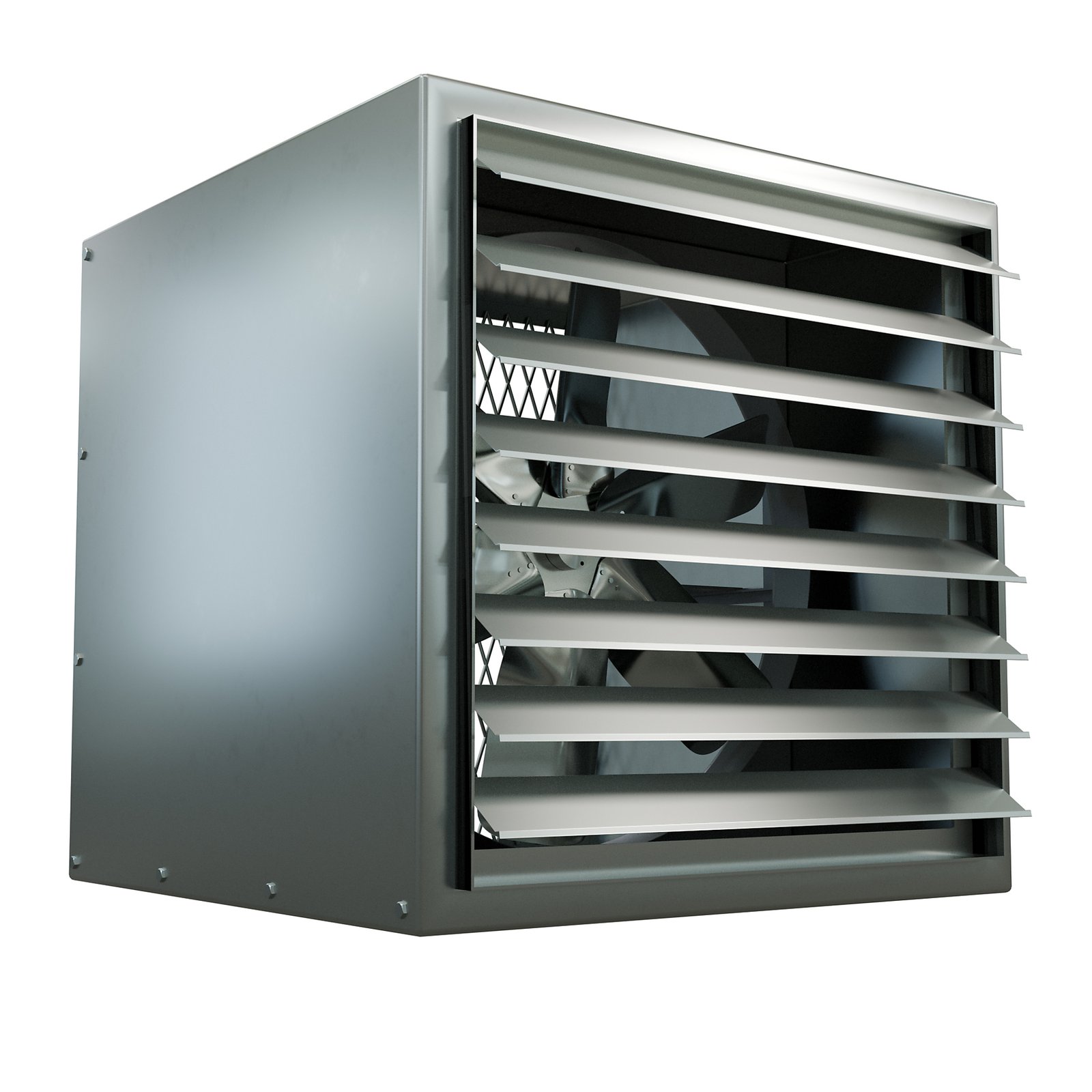
Quick answer: Large-diameter ceiling fans make people feel cooler by moving a large volume of air gently over the floor. Wall exhaust fans remove hot air and fumes from the building. Fresh air supply units bring in filtered outside air. Portable air conditioners cool specific workstations, and dehumidifiers control moisture. Most warehouses get good results by combining air movement with ventilation.
Why warehouses get hot
Tall buildings collect hot air under the roof, heat from lights and machinery adds up, and large doors let in hot outdoor air. Cooling the entire volume with conventional air conditioning is often impractical. The goal is usually to keep people comfortable and goods protected, using airflow, ventilation and targeted cooling.
Options compared
| Equipment | What it does | Suited to |
|---|---|---|
| Large-diameter ceiling fan (HVLS) | Moves a large air column slowly; creates a cooling breeze across the floor and mixes air in winter | Open areas with high ceilings |
| Wall exhaust fan | Removes hot air, fumes and humidity | Workshops, warehouses, livestock buildings |
| Fresh air supply unit | Brings in filtered outside air, balancing exhaust | Buildings with exhaust fans and limited inlets |
| Portable air conditioner | Cools a defined area or workstation | Spot cooling, server racks, assembly stations |
| Dehumidifier | Removes moisture from the air | Storage of humidity-sensitive goods, drying after water damage |
Large-diameter ceiling fans
Ceiling fans with diameters of 8 to 24 ft turn slowly but move a large volume of air. The airflow spreads along the floor and creates an even breeze over a wide area. In winter, running them slowly pushes warm air from the ceiling back down. Check the mounting structure, the clearance to lights, sprinklers and racking, and the electrical supply. Mounting must be done according to the manufacturer’s instructions and local codes.
Exhaust and supply working together
Exhaust fans high on the walls remove heat that builds up under the roof. They need inlet air to work properly, either through open doors and louvers or a fresh air supply unit with filters. Our guide on sizing a shop exhaust fan explains how to calculate CFM using air changes per hour.
Spot cooling with portable units
Portable air conditioners cool where people work instead of the whole building. Water-cooled units reject heat into water instead of through an exhaust duct, which helps in spaces where venting hot air is difficult. Size them by BTU rating and the area or heat load they need to handle, and check the power requirement.
Humidity control
High humidity makes heat feel worse and can damage cardboard, electronics and metal parts. Commercial dehumidifiers, including low-grain refrigerant (LGR) types, remove moisture efficiently even at lower humidity levels. They are also used after floods or leaks to dry buildings.
Our fans and air quality range includes cabinet wall exhaust fans, fresh air supply units, a large-diameter ceiling fan, portable water-cooled air conditioning and dehumidifiers.
Putting it together
- Remove heat at the roof with exhaust fans and give them inlet air.
- Add ceiling fans to keep air moving across the work floor.
- Use spot cooling for fixed workstations that stay hot.
- Control humidity where goods or processes need it.
Frequently asked questions
Can I run ceiling fans and exhaust fans together?
Yes. Ceiling fans move air inside the building; exhaust fans replace it. They complement each other.
Do large ceiling fans cool the air?
No. They do not lower air temperature; they make people feel cooler through air movement.
Can portable air conditioners cool a whole warehouse?
Generally not. They work well for specific areas or workstations.
Send us your building size, layout and the problem areas, and we will help you plan airflow and cooling.