
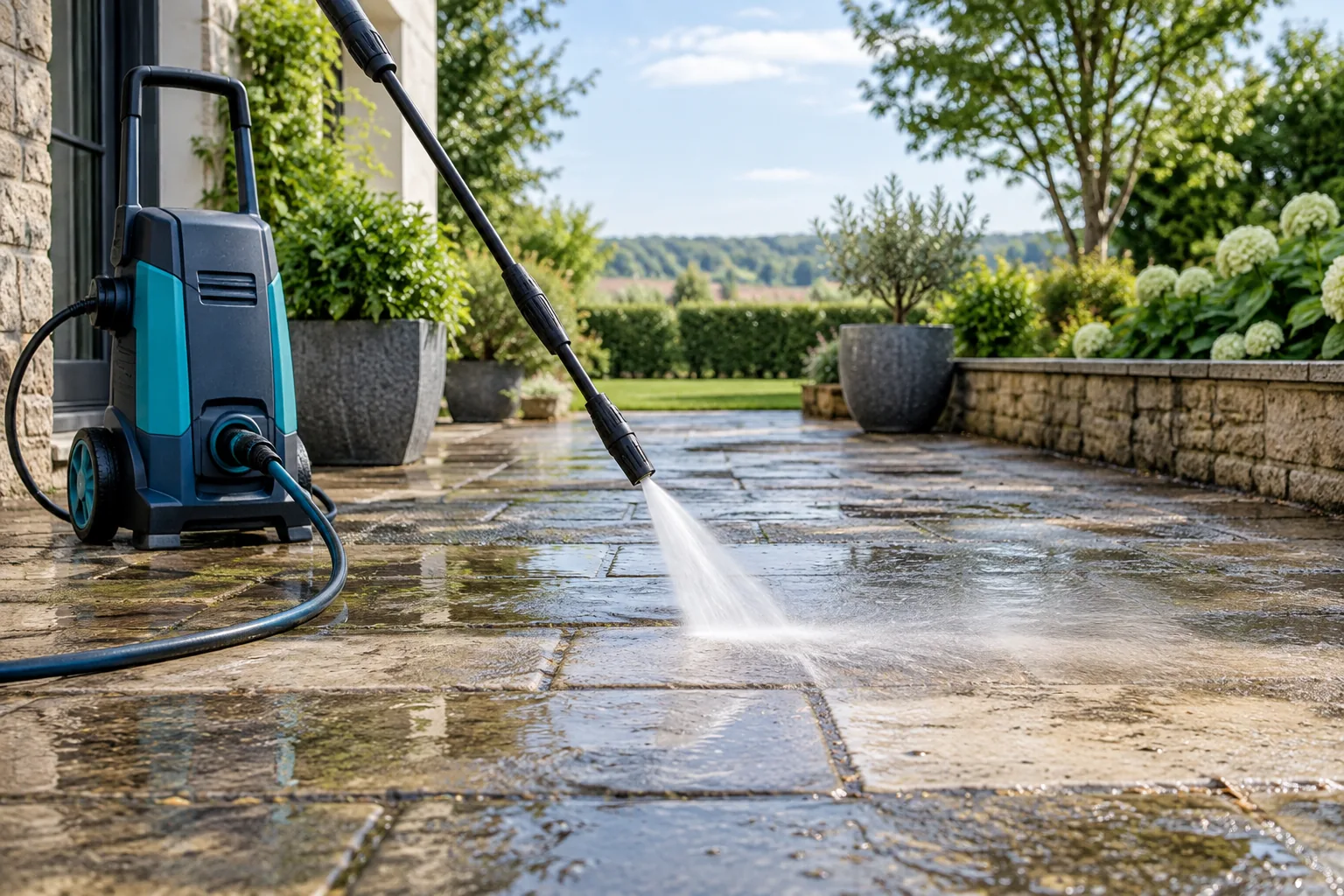
Quick answer: Choose a hot water pressure washer when you regularly clean grease, oil, fats or other residue that water alone smears around, such as on engines, fleet vehicles, farm machinery or food-processing areas. For mud, dirt, loose paint and general surface cleaning, a cold water machine is usually enough and costs less to buy and maintain.
Why hot water cleans differently
Heat thins oil and grease and helps break the bond between the residue and the surface. Cold water can blast grease off with pressure, but it tends to move it around instead of lifting it. With hot water the same job often needs less detergent and fewer passes. Some machines can also produce wet steam at lower pressure, which helps with degreasing, thawing and sanitizing-style cleaning.
Hot water vs cold water at a glance
| Factor | Cold water | Hot water |
|---|---|---|
| Grease and oil | Limited | Strong advantage |
| Mud, dirt, algae | Good | Good |
| Purchase price | Lower | Higher |
| Weight and size | Lighter, more portable | Heavier; often skid or trailer mounted |
| Fuel | Engine fuel or electricity only | Plus burner fuel (commonly diesel or kerosene) |
| Maintenance | Pump and engine/motor | Plus burner, coil and fuel system |
Jobs where hot water earns its cost
- Fleet, truck and bus washing, especially undercarriages and engine bays
- Construction and farm equipment with hydraulic oil and grease build-up
- Workshop floors with oil stains
- Food-processing, kitchen exhaust and waste areas with fats
- Cold climates, where warm water also helps remove ice and frozen dirt
What to compare on hot water machines
- PSI and GPM: Pressure loosens dirt, flow carries it away. For large areas and equipment, flow (GPM) matters as much as pressure. See pressure washer PSI vs GPM.
- Burner and temperature rise: Check the maximum outlet temperature and how quickly the burner heats incoming water.
- Power source: Gas engine models work away from power outlets; electric models suit fixed wash bays with adequate ventilation.
- Pump type: Triplex plunger pumps with belt or gear drive are common on commercial machines.
- Mounting: Cart, skid, truck-mount or trailer. Skid units can be installed on a truck bed or trailer.
Our pressure washer range covers hot water gas units, wet steam units, electric cold water units and complete trailers.
Operating safely
Hot water machines burn fuel and produce exhaust. Use them outdoors or in well-ventilated wash bays only, follow the manual for fuel type, and never leave a running burner unattended. Hot water and steam can scald, so wear suitable protective clothing and use the correct nozzle. Use detergents that are compatible with the machine and allowed where you discharge wastewater.
Maintenance to plan for
In addition to normal pump oil and engine service, a hot water unit needs periodic burner nozzle and fuel filter replacement, combustion adjustment and descaling of the heating coil if your water is hard. Before freezing weather, drain or winterize the pump and coil following the manufacturer’s instructions.
Frequently asked questions
Can I add hot water to a cold water pressure washer?
Only if the pump is rated for hot inlet water; many are not. Feeding hot water into a pump that is not designed for it can damage the seals.
Is hot water safe on painted vehicles?
Generally yes when you use appropriate pressure, distance and nozzle. Avoid holding the spray close to decals, seals or damaged paint.
Does hot water need less detergent?
Often, yes. Heat does part of the work that chemicals would otherwise do, although heavy grease may still need a degreaser.
Describe what you clean and how often, and we will help you decide between hot and cold water models.