
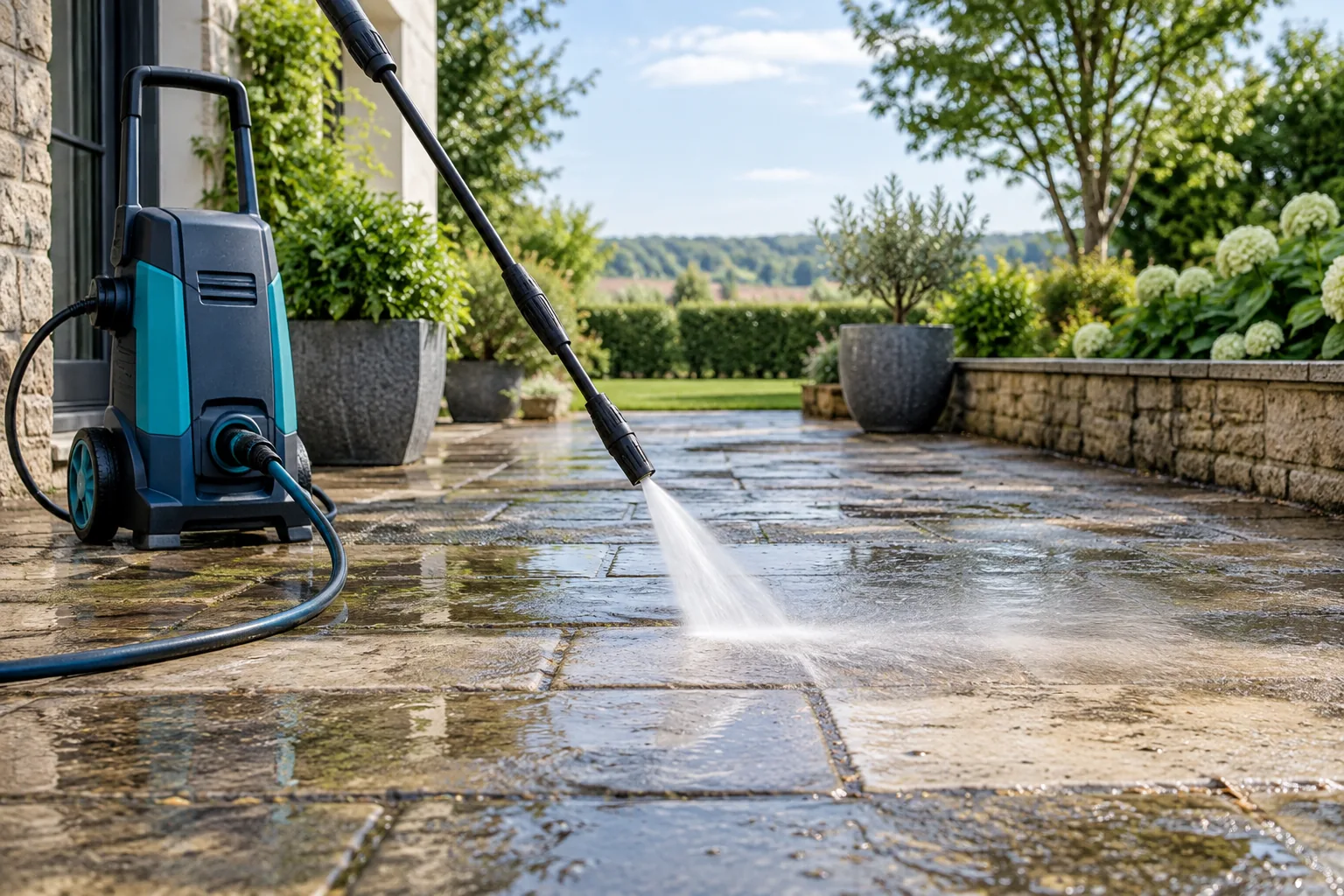
Quick answer: PSI describes pressure; GPM describes water flow. Cleaning speed and surface safety depend on both, plus nozzle angle and distance. Compare rated figures at the same operating point.
What does PSI mean on a pressure washer?
PSI measures water pressure and affects how strongly the spray can loosen material from a surface. More pressure is not automatically better: excessive pressure or a narrow nozzle can damage paint, timber, seals, masonry joints, vehicles, and soft materials.
What does GPM mean?
Gallons per minute measures water flow. Higher flow moves loosened dirt and detergent away faster and can reduce cleaning time on large areas. The available water supply must meet the machine requirement or performance and pump life may suffer.
How PSI and GPM work together
A rough comparison called cleaning units multiplies PSI by GPM, but it does not replace surface requirements, nozzle pattern, pump design, or duty cycle. Compare both ratings individually and confirm they are measured at compatible operating conditions.
Electric or gas pressure washer?
Electric models can suit lighter, quieter work near a suitable power supply. Gas-powered machines are commonly selected for mobility and heavier outdoor cleaning. Compare runtime, maintenance, noise, transport, hose reach, and ventilation requirements.
Choose the nozzle for the surface
A wider spray pattern is generally gentler; a narrow jet concentrates force. Start at low pressure, test an inconspicuous area, keep a safe distance, and use only nozzles and detergents approved for the machine and material.
Specifications to check before buying
Confirm rated and maximum pressure, rated flow, pump type, engine or motor, hose length, inlet requirement, detergent method, included nozzles, dimensions, weight, and supported accessories. Use the rated operating figures for comparison.
Product-specific documentation, an accepted quotation, an order confirmation, and applicable law take priority where they provide more specific requirements.