
Quick answer: Add watts for everything running together, then add the largest extra motor-starting demand. Choose continuous and surge ratings that cover those loads with sensible operating headroom.
How many watts does a generator need?
Add the running watts of equipment expected to operate at the same time, then add the single largest extra starting load. Motors in pumps, compressors, refrigerators, and power tools can require substantially more power for a few seconds when they start.
Running watts versus starting watts
Running watts describe continuous demand; starting or surge watts describe short peaks. A generator must cover both figures. Compare ratings under the same test conditions and never use the larger surge figure as the continuous operating capacity.
Generator size for essential home loads
List only the circuits or appliances that must remain available, such as refrigeration, selected lighting, communications, a water pump, or medical equipment. Heating, air conditioning, and electric water heating can change the calculation significantly and may require professional load assessment.
Generator size for tools and jobsites
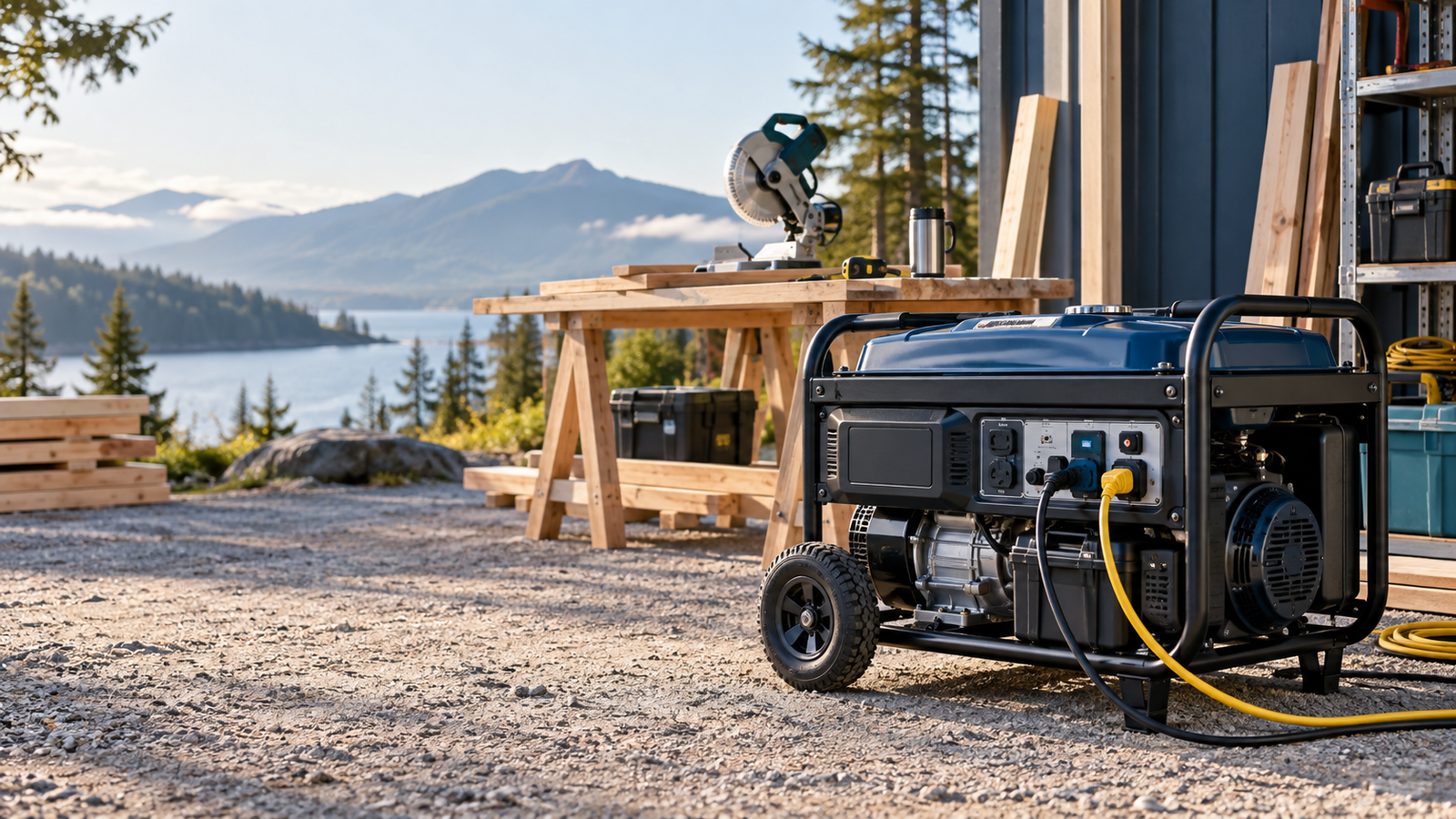
Check the data plate for every saw, welder, compressor, pump, or charger. Plan for tools that may overlap, voltage requirements, outlet type, cable length, duty cycle, and extra capacity for difficult motor starts.
How much spare capacity should you allow?
Avoid planning continuous operation at the absolute maximum rating. Practical headroom helps with changing demand, temperature, elevation, future equipment, and starting events, but the correct allowance depends on the manufacturer guidance and actual load profile.
Safety and building connections
Never run a combustion generator inside a building, garage, or partly enclosed space. A building connection requires correctly rated transfer equipment installed by a qualified electrician; never back-feed a socket or improvise a connection.
Product-specific documentation, an accepted quotation, an order confirmation, and applicable law take priority where they provide more specific requirements.