
Quick answer: Use a sump pump for a purpose-built basin with automatic water-level control. Use a utility pump for temporary water transfer or cleanup when its inlet, solids, and duty ratings suit the task. Check the exact model before assuming either can handle dirty water.
Sump pump role
A sump pump usually sits in a basin and turns on through a float or sensor. The basin size, switch travel, discharge route, check valve, and backup plan matter as much as rated flow. Choose flow at the actual discharge head, not the pump’s maximum free-flow figure.
Utility pump role
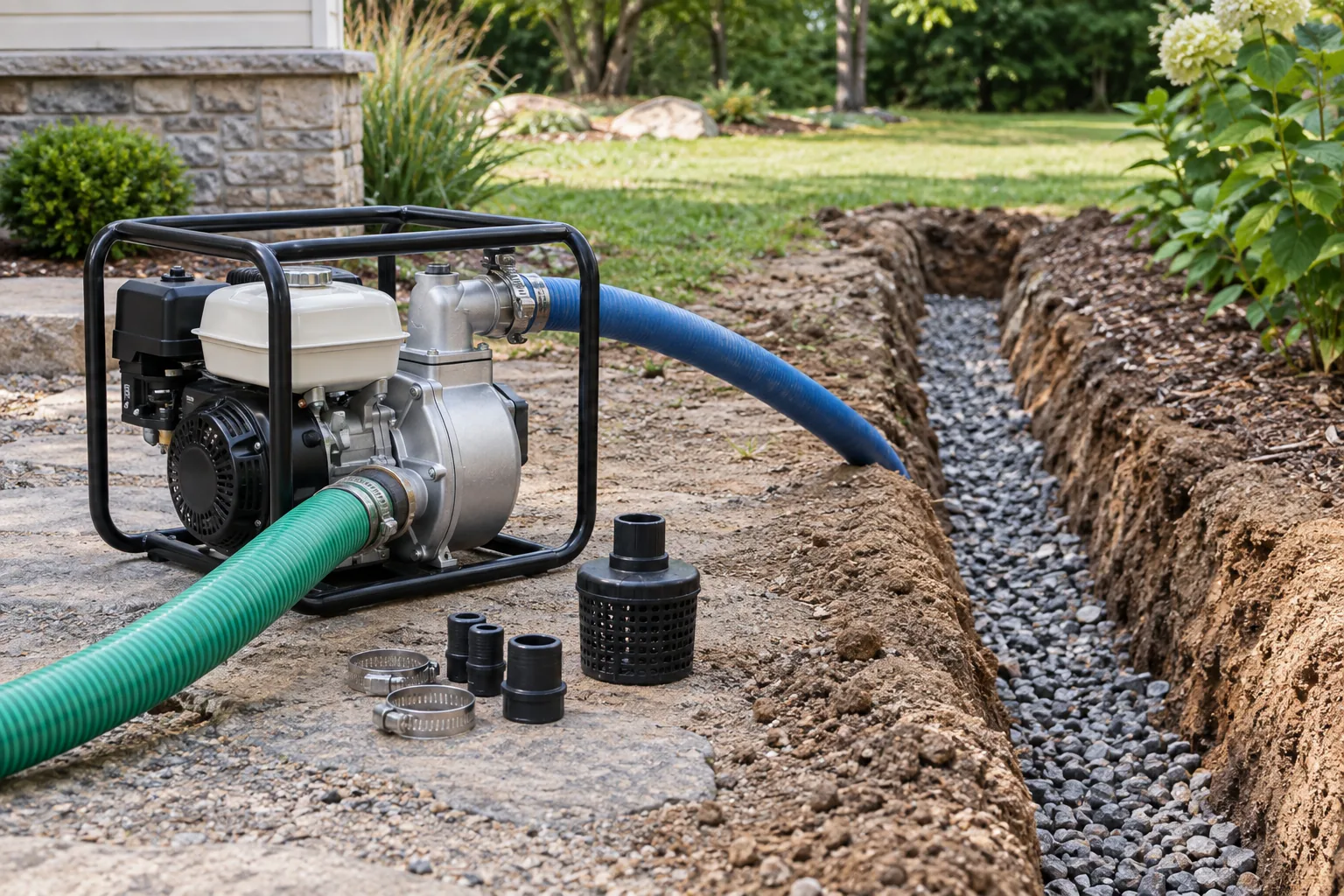
A portable utility pump can move water from a shallow area, tank, or temporary collection point. Some models require priming or supervised operation and may not tolerate running dry. Check minimum water depth, solids passage, hose size, and electrical protection.
Prevent failure
Measure vertical lift and pipe or hose friction, then check the pump curve. Route discharge away from the foundation and comply with local drainage rules. Never use ordinary electric equipment in standing water unless the product and installation are rated for the conditions.
Need help matching these checks to a specific model? Ask the KayrosTool team with the product name and your intended use.