
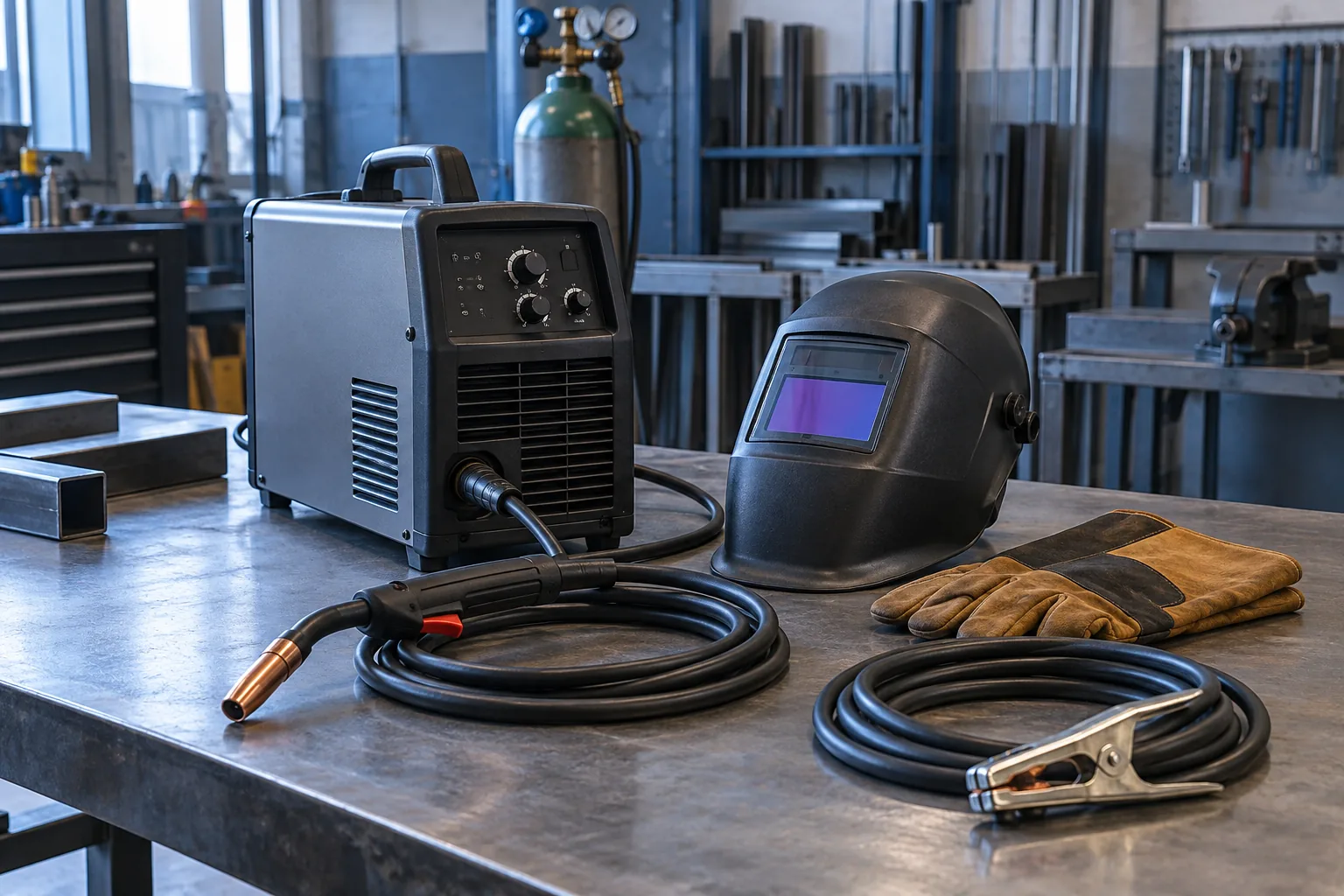
Quick answer: MIG suits repeatable fabrication, TIG offers precise control and a clean finish, and stick works well for portable outdoor repair. Choose by material, thickness, worksite, skill, and power supply.
When is MIG welding suitable?
MIG feeds wire continuously and can be efficient for fabrication and repair once settings and gas coverage are correct. It is often approachable for new operators, but wind, surface preparation, wire selection, and machine capacity still affect weld quality.
When is TIG welding used?
TIG offers precise heat and filler control and can produce clean welds on suitable steel, stainless steel, and nonferrous material. It generally demands more coordination, cleaner material, slower travel, and the correct machine features for the metal involved.
When is stick welding useful?
Stick equipment is portable and commonly used for repair, structural, and outdoor work with the correct electrodes. It tolerates field conditions better than gas-shielded processes but creates slag, requires electrode changes, and needs suitable technique.
Match the process to metal and thickness
Identify the base metal, joint, thickness range, position, required penetration, appearance, and applicable procedure. No single process is best for every task, and critical work may require a qualified procedure and certified operator.
Check input power and output range
Confirm supply voltage, phase, circuit capacity, plug, amperage range, polarity, AC or DC requirements, wire and electrode sizes, and generator compatibility. An electrician should assess fixed supply changes.
Understand duty cycle and accessories
Duty cycle states how long a welder can operate within a ten-minute period at a specified output and temperature. Also budget for torch or holder, ground lead, regulator, gas, consumables, protective equipment, ventilation, and safe work-area preparation.
Product-specific documentation, an accepted quotation, an order confirmation, and applicable law take priority where they provide more specific requirements.