
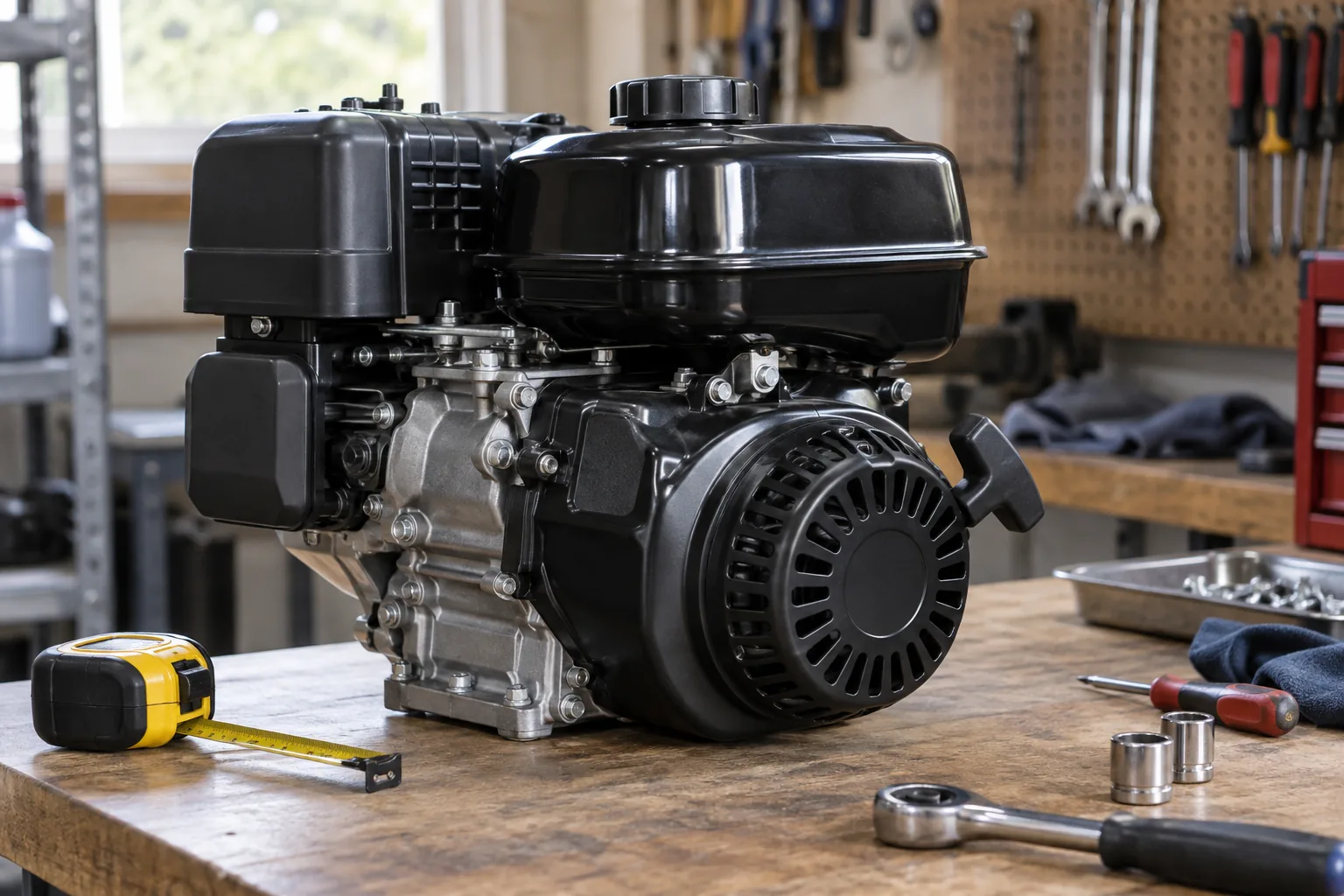
Quick answer: Match the original engine identification, crankshaft, mounting, rotation, controls, and operating speed before comparing horsepower. A power rating cannot fix a shaft or wiring mismatch.
Start with the complete engine identification
Record the manufacturer, model, type, specification, serial, and date codes from the original engine. The equipment model is also important because one machine family may have used different shafts, charging systems, controls, or exhaust arrangements.
Match the crankshaft and rotation
Measure orientation, diameter, length, keyway, threads, taper, shoulder, and rotation from the specified viewing position. A mismatch can prevent attachment installation, create misalignment, or reverse the driven equipment.
Confirm mounting dimensions
Compare base footprint, bolt-hole spacing, shaft center height, clearance around the starter and air filter, exhaust direction, and access for service. Do not drill or modify structural parts without qualified review.
Compare power and operating speed
Review displacement, rated output under the same standard, governed speed, torque curve, and duty. More advertised horsepower does not correct an incompatible shaft, unsafe speed, insufficient cooling, or unsuitable application rating.
Check electrical and control systems
Match recoil or electric start, starter voltage, alternator output, regulator, stop circuit, safety interlocks, throttle, choke, low-oil protection, and connectors. Wiring changes require correct documentation and competent installation.
Verify application and warranty conditions
Confirm that the engine is approved for the equipment type and operating angle. Installation, emissions rules, commercial use, modifications, and transferred accessories may affect compliance or warranty coverage.
Product-specific documentation, an accepted quotation, an order confirmation, and applicable law take priority where they provide more specific requirements.