
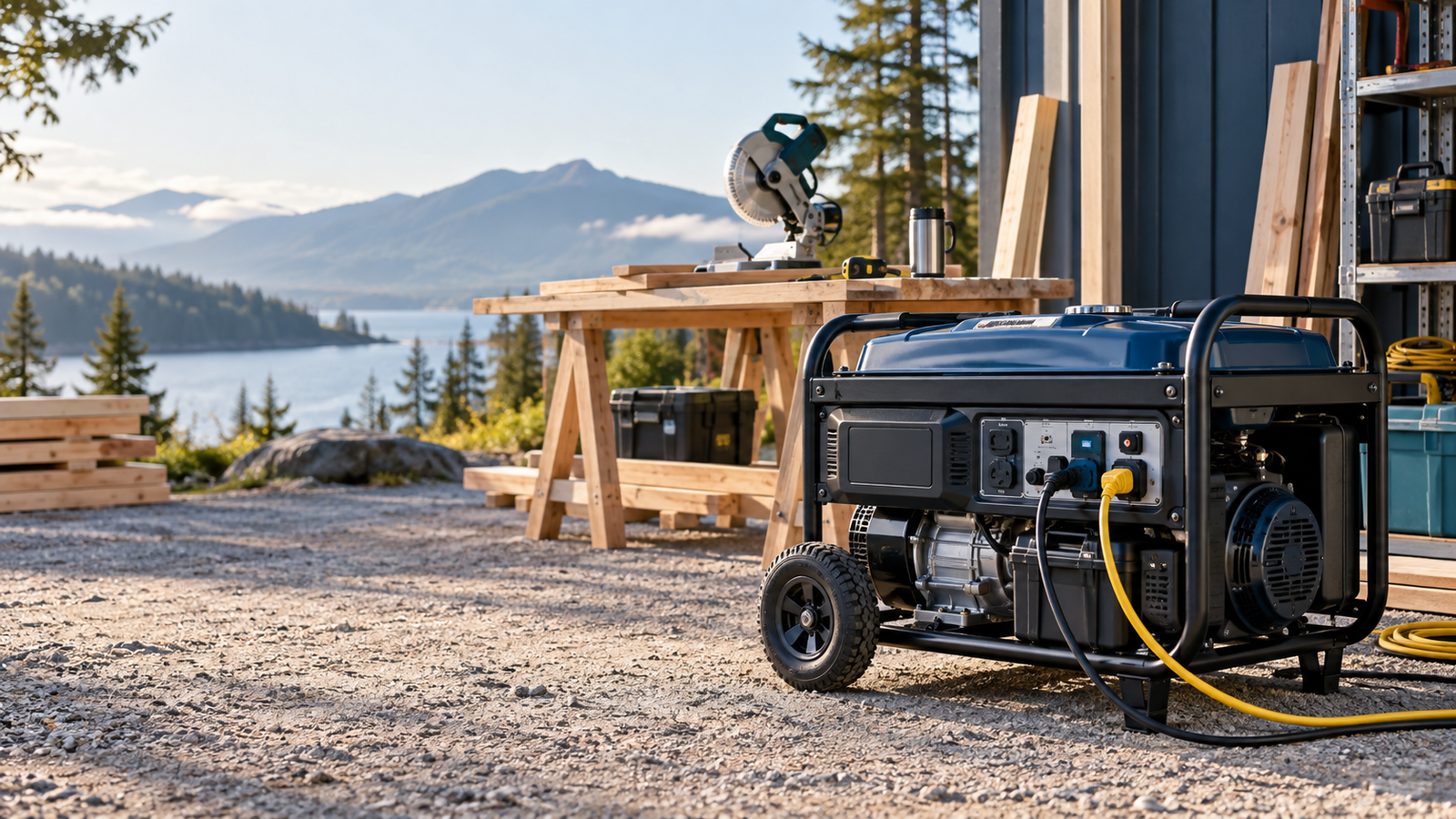
Quick answer: Start with essential loads: refrigeration, a few lights, communications, and any critical pump or medical device. Calculate their simultaneous running watts and the largest motor startup event before shopping for a generator.
Separate essential from optional
Write two columns. Put food preservation, basic lighting, communications, and necessary water or medical equipment in the first. Put space cooling, electric water heating, cooking appliances, and convenience loads in the second. Large heating and cooling loads can dominate sizing, so decide deliberately which can stay off during an outage.
Build a load schedule
Note each device’s rated running watts, startup watts where relevant, and whether it can run at the same time as other equipment. Staggering a pump, microwave, or air conditioner may reduce the peak. Do not count a generator’s surge rating as its continuous rating. Check whether the generator has enough individual outlet and circuit capacity as well as total watts.
Plan the connection and fuel
A portable generator must stay outdoors and away from openings to prevent carbon monoxide exposure. Do not connect it to a wall outlet. Have a qualified electrician select and install transfer equipment for fixed wiring. Estimate fuel for the expected outage at a stated load, then follow local fuel-storage rules and the manufacturer’s maintenance schedule.
Need help matching these checks to a specific model? Ask the KayrosTool team with the product name and your intended use.