
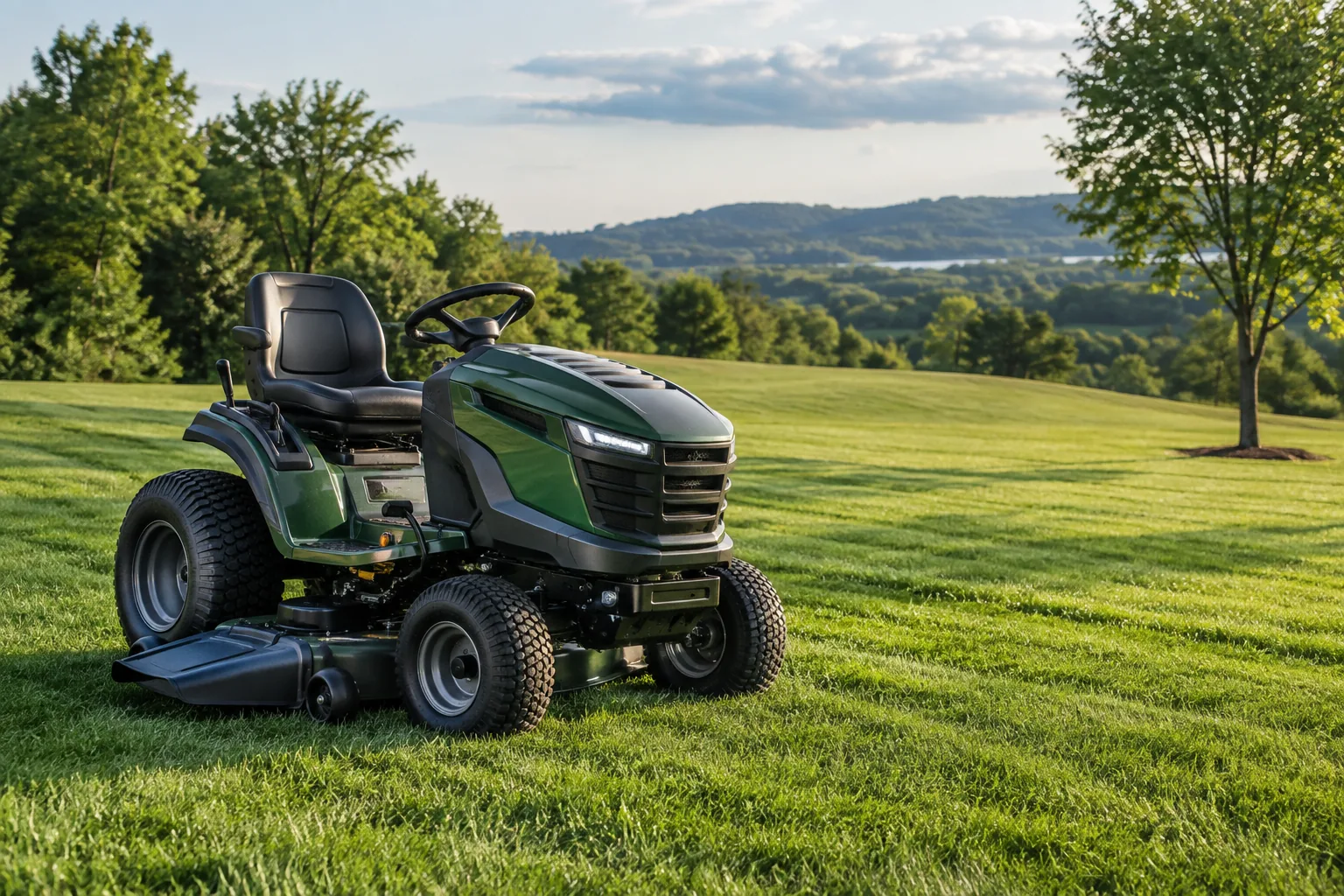
Quick answer: For most small yards, a maneuverable mower that fits gates and storage is more useful than the widest deck. Measure the narrowest passage, note slopes and obstacles, and estimate how much trimming remains after each mow.
Measure before comparing
Record lawn area, gate width, tight turns, tree spacing, and storage dimensions. A wide deck may reduce passes on open turf but waste time around beds and narrow corners. If a mower cannot pass the gate or turn safely, its advertised productivity will not help.
Choose a practical format
A walk-behind mower can suit compact spaces and simpler storage. A self-propelled model reduces pushing on larger or uneven ground. A compact riding mower can help when area or operator needs justify it, but its turning radius and transport size matter. Follow model-specific slope limits for any mower.
Check ownership details
Compare cut-height adjustment, grass collection or mulching, battery runtime or fuel use, blade access, and local parts availability. If buying electric, include a second battery only when the measured area and stated runtime justify it. Prioritize a mower you can clean, maintain, and store safely.
Need help matching these checks to a specific model? Ask the KayrosTool team with the product name and your intended use.